The Balkan country of Bulgaria is the poorest in the EU but is rich with history and could be called the original melting pot; Thracians, Bulgars, Ottomans, Slavs, Romans, and the Soviet Union have all staked their claims to these mountainous lands. In this long-inhabited land, your knowledge of the Latin alphabet has no use here — it’s all Cyrillic but with just a little practice you’ll be reading in Bulgarian in no time. We watched a few youtube videos to help prepare us for the challenge. We travelled here in May 2025 which was very pleasant weather. Peak rose bloom is from Mid-May to Early- June so if you can go to Bulgaria during this time, you’ll be treated to a huge abundance of roses throughout the country.
We visited a sampling of cities in our first visit to the country: Ruse, Veliko Tarnovo, Stara Zagora, Plovdiv, and the capital city of Sofia. This post is about:
Ruse, Bulgaria
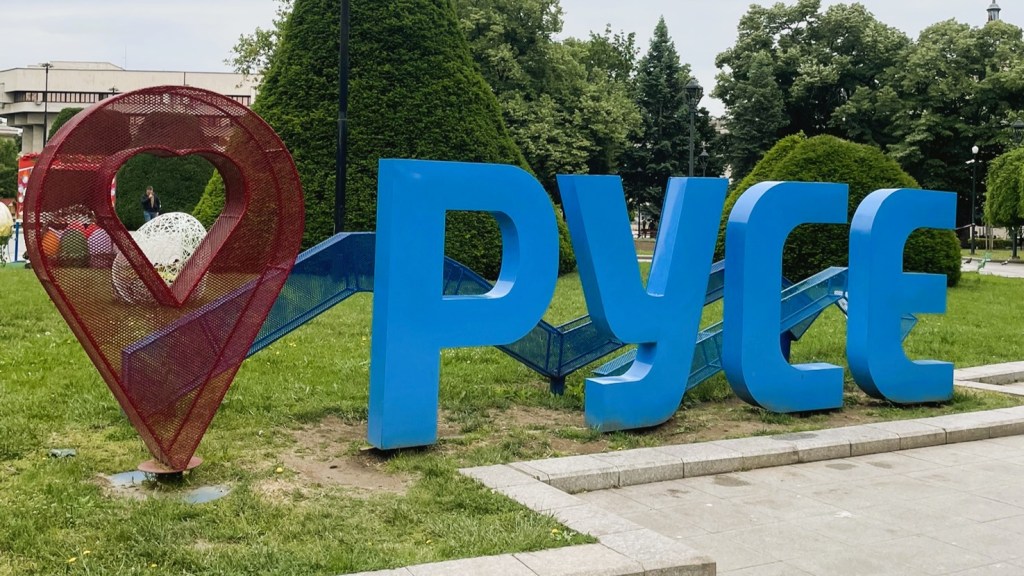
This trip started with a bang. We landed in Bucharest, Romania to find out there was some kind of miscommunication between our hotelier and the pre-arranged private ground transportation. We were stranded. But hey, we’ve read Cameron Hewitt’s book, “The Temporary European” and he taught me to think — jams are fun! So, I called the hotel and was passed to the owner’s son who ultimately offered to come and get us. Normally, I say “no!” to anything I suspect might be an imposition on someone, but I really wasn’t in the position to be refusing a rescue, so I put him on hold and after a brief chat with Andrew we agreed to accept the offer to come drive us to Ruse. By the way, that is not pronounced the way you think it is, it’s said Roosay and in Bulgarian is spelled Pyce. I’ve also seen it spelled Rousee so maybe anything goes. It’s nickname is “Little Vienna”
About two hours later, on the top of a parking deck a grey Saturn crossover pulls up. To my surprise, the driver is in his mid-twenties and accompanied by his girlfriend. The voice of the man on the phone suggested someone older, but perhaps that is the effect of Rakia and helping run the family hotel. We get in the back and find two bottles of water for us and enough stuff to let us know this was this kid’s personal car. This sweetheart came to get us across an international border, as a personal welcome to his country and his family’s hotel — you don’t get much better hospitality than that. We engaged in a really useful conversation about our cultural differences and similarities. He asked me about gun violence in the USA, and tells me a story about how a friend of his was shot at in his own garage in Miami. Then he told us about his concerns for government corruption in his country and his desire to do something about it which is why he is in law school. Without saying it explicitly we had a quite agreement that the people of a country are not the government of that place. We’re off to a good start.
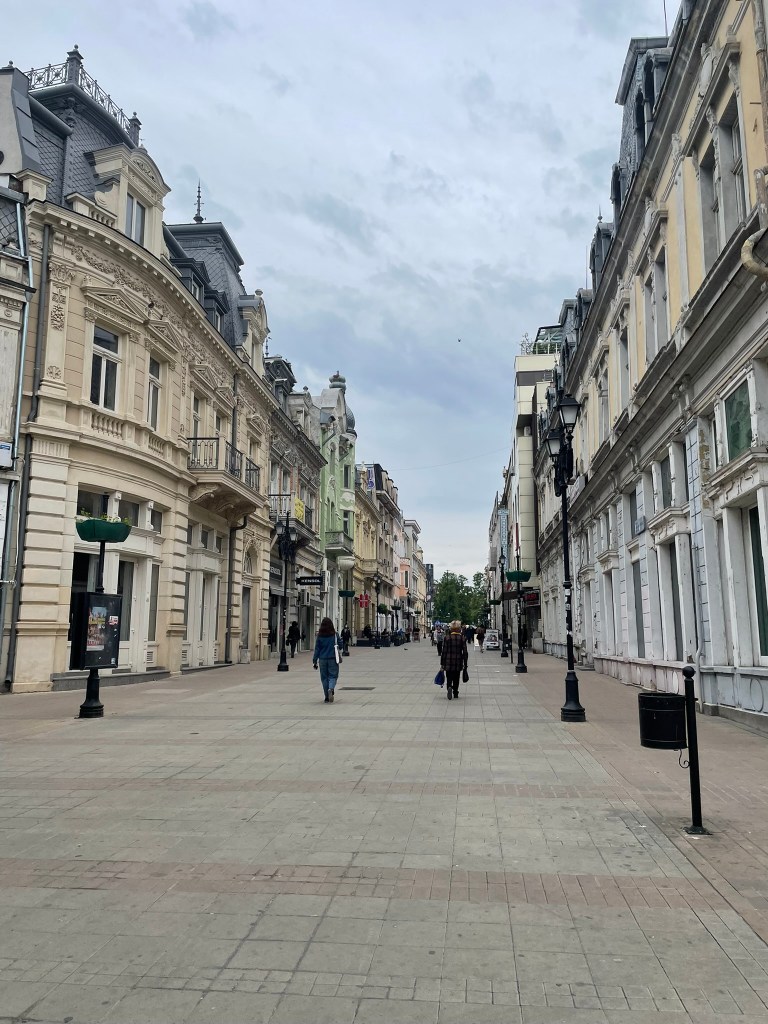
Where we stayed: The Lombardi Family Hotel, ~$45/night
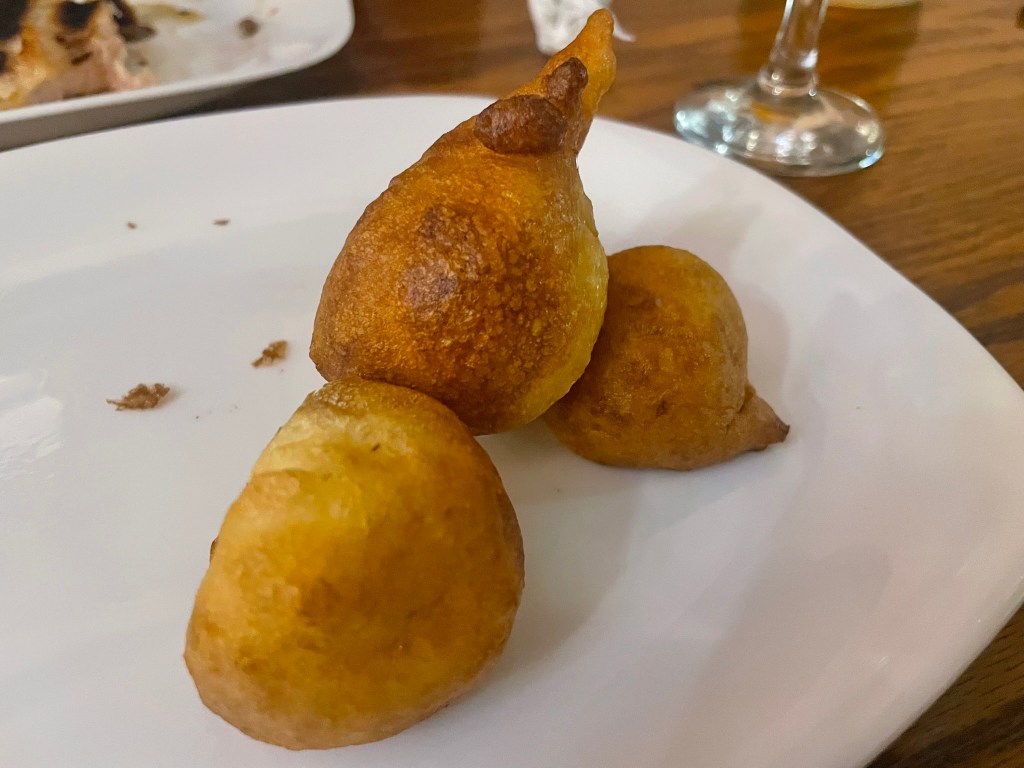
In a lovely winter garden, they serve a nice breakfast, including an option for a traditional Bulgarian breakfast of Mekitsi, a close cousin of Hungarian langos or a less-sweet funnel cake. We also got a sampling of the traditional cheese and some jam to go along with it. The same fella who drove us in from Bucharest entertained us with his musical preferences on TV during breakfast. I liked the small balcony on our room. The rooms have themes based on other European cities, ours was Venice and the masks decorating the space were brought back from the family’s trip there. I’d recommend this hotel to anyone travelling to Ruse unless you have mobility challenges as there is no lift.
What we ate: Dabov Specialty Coffee, Restaurant Ostankino
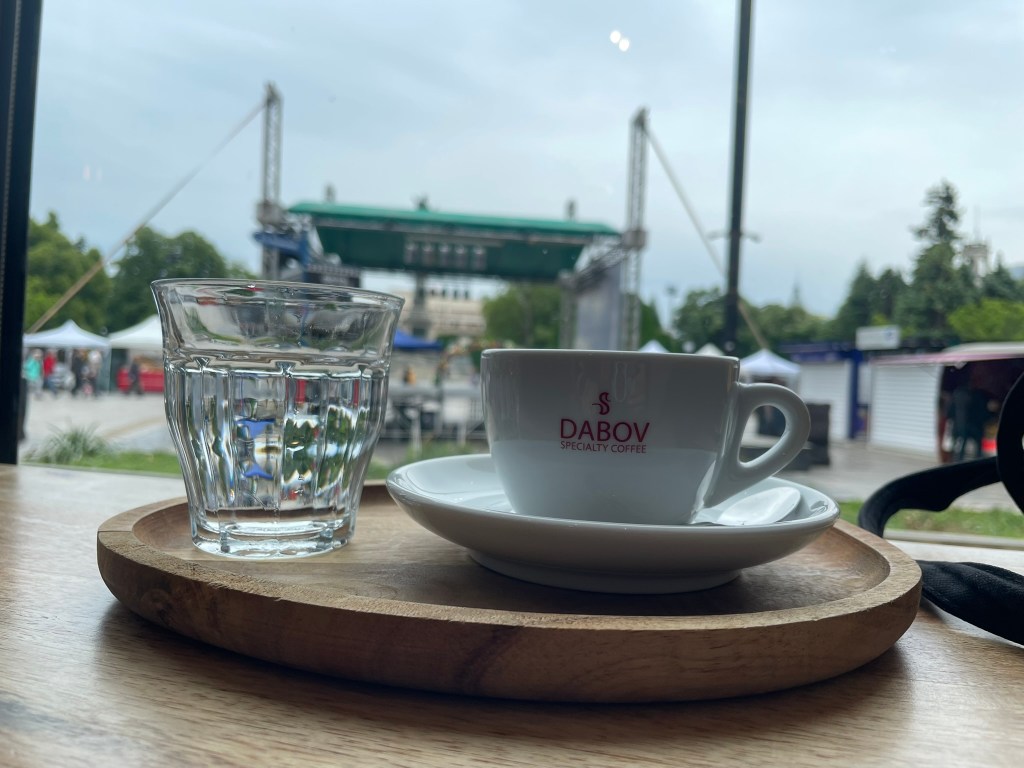
Dabov Specialty Coffee
I wasn’t expecting much in terms of coffee here. European Coffee Trip is our go-to resource for advice about which specialty coffee shops to prioritize when we travel. The content about Bulgaria was somewhat old and we learned that this roastery is a chain which always makes us a bit skeptical; it’s just so hard to replicate a great process from store to store. We were happily proved wrong, and this was an excellent cup. The article from ECT said many flattering things about the man who owns the business, and the cup did not disappoint – well-balanced espresso with perfectly steamed milk.
Restaurant Ostankino
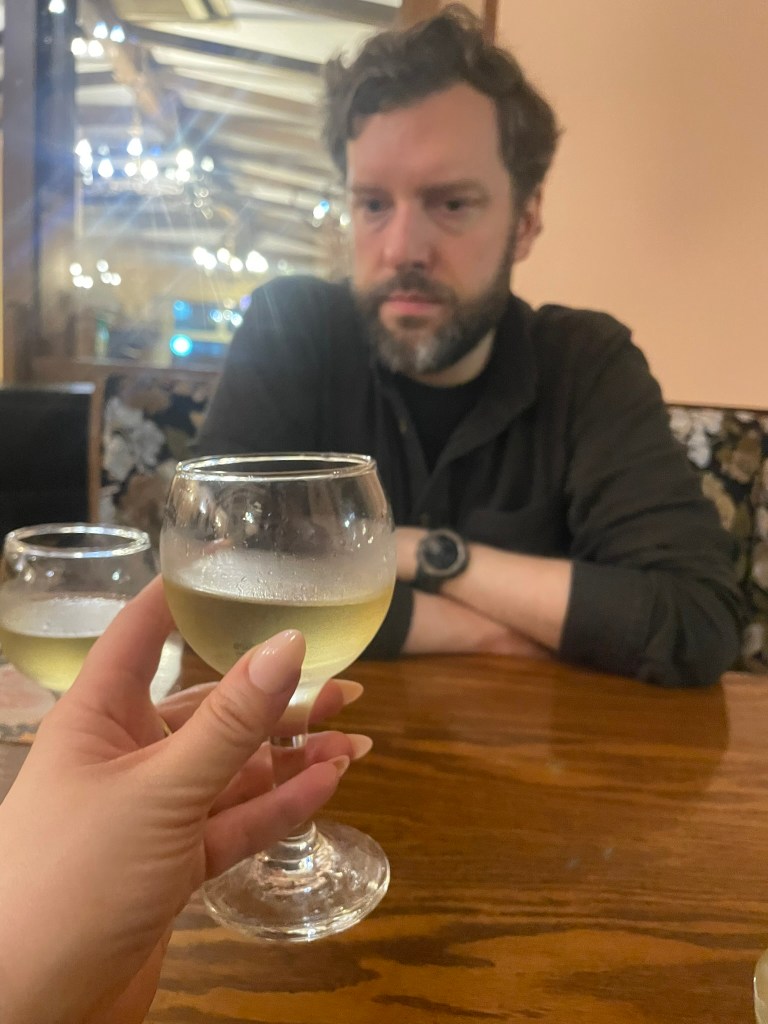
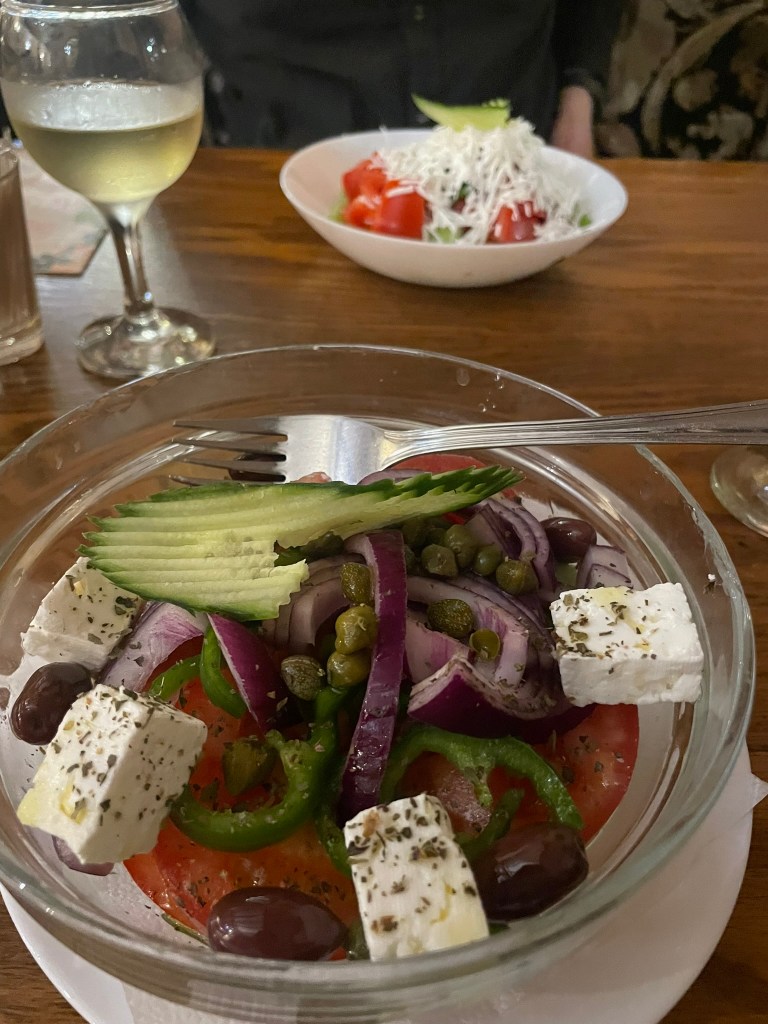
Good food, English menu available upon looking bewildered when spoken to, and kind service despite the language barrier. The salads here were very good. This is where we first learned the importance of knowing that nodding works in reverse here. If you nod, you’re saying no. If you shake your head – that’s a yes! So when asked if Andrew would like a refill on his Rakia and I shook my head to indicate we’d had enough and when the waitress was walking away I realized what I’d done — sorry Andrew. Another round appeared. Наздраве! (Na Zdrave) aka Cheers!
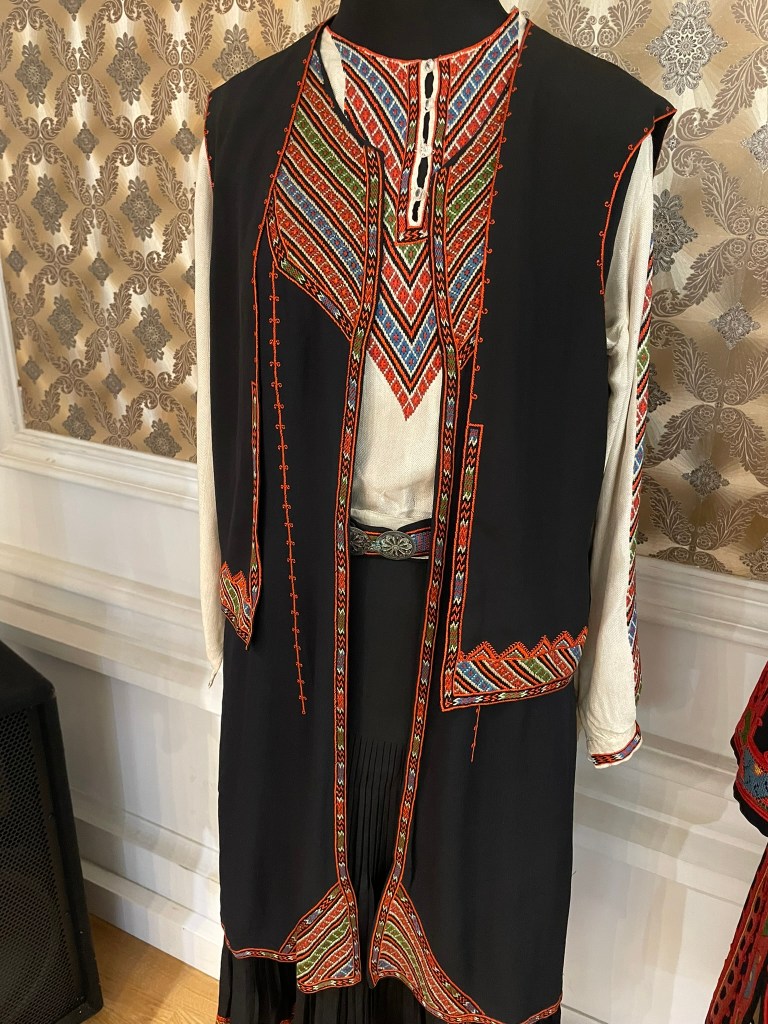
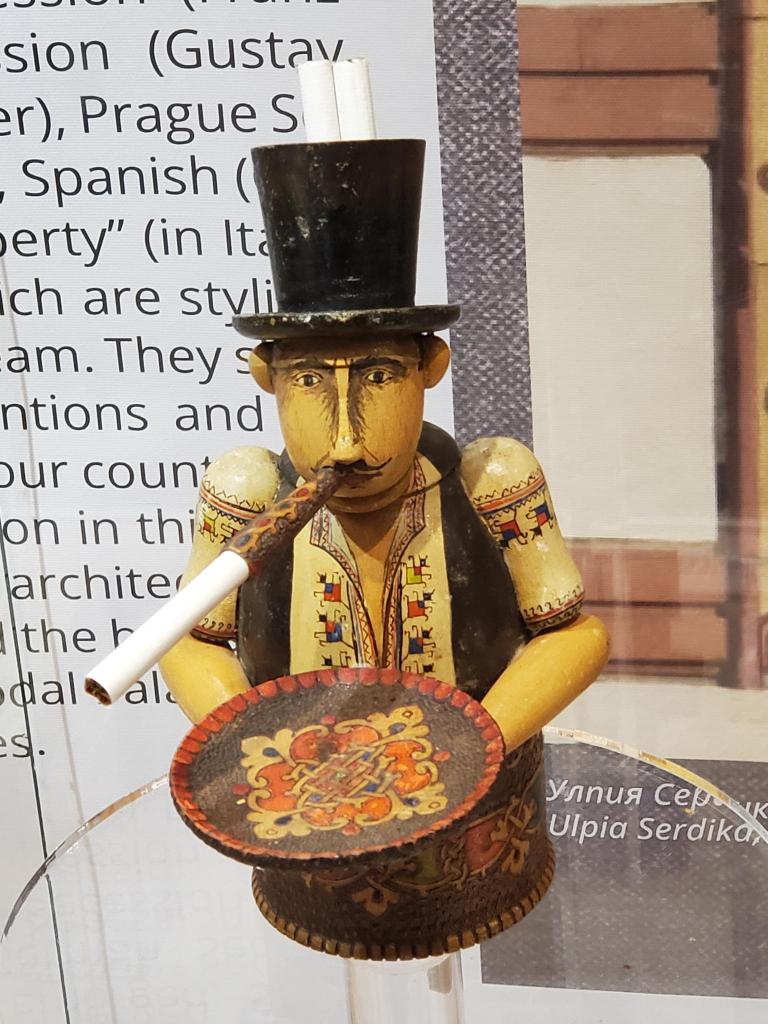
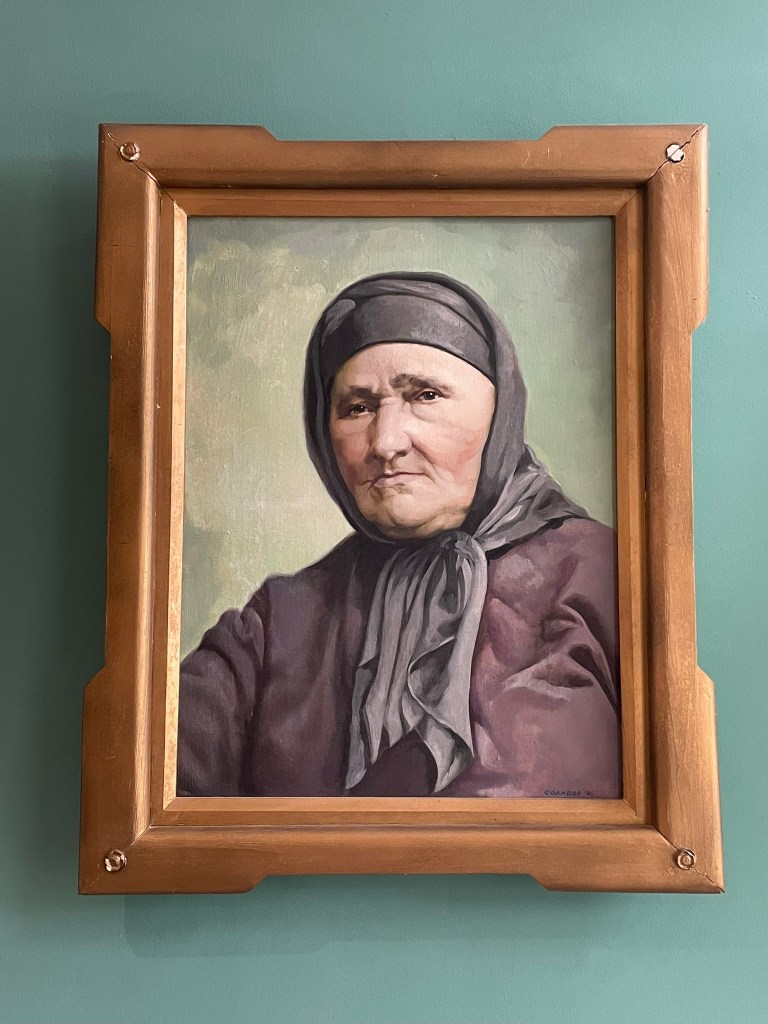
What we saw: House Museum of Baba Tonka, Museum Zahari Stoyanov, and the Regional Historical Museum. All with an entry fee of just a few dollars each and with English translations. This offers a good sampling of the history of the area. One impression from the visits is just how ancient the history is in this area. The city emerged from a Neolithic settlement of the third to second millennium BCE, when pottery, fishing, agriculture, and hunting developed. I also enjoyed learning about how the country has tried to champion its culture through the folk-craft of embroidery; there are many beautiful examples available at the Regional History Museum. Another thing I appreciated was the identification of a woman as a national hero: learn more about Baba Tonka.
 big apple, bigger world
Leave a comment